
1905–1918: The German Empire’s First Cinemas
-
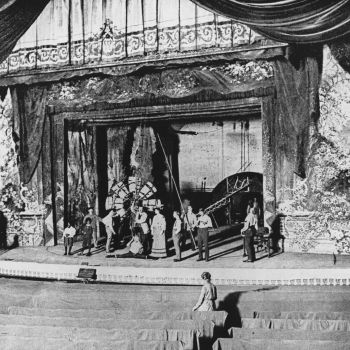
The stage of the Wintergarten variety theater on Friedrichstraße (Dorotheenstadt, now Berlin-Mitte), c. 1905. The brothers Max and Emil Skladanowsky introduced their projection machine, the Bioskop, here in November and December 1895.
Source: Deutsche Kinemathek. -
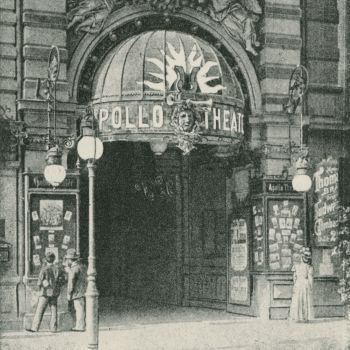
Apollo Theater (variety theater), Friedrichstraße 218 (Friedrichstadt, now Berlin-Mitte). As early as 1896 the first motion pictures were screened here. In 1903 Oskar Messter presented his “Kosmograph” – a film projector synchronized with a gramophone – at this venue (photo: 1905).
Source: Deutsche Kinemathek -
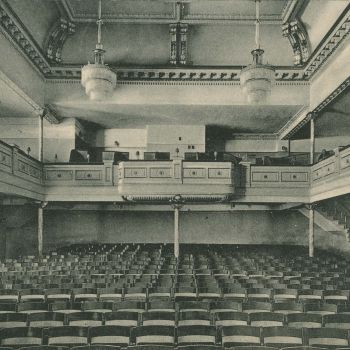
BTL (Biophon-Theater-Lichtspiele), Turmstraße 12 (Berlin-Tiergarten), shown in its 1905 condition
Source: Deutsche Kinemathek -
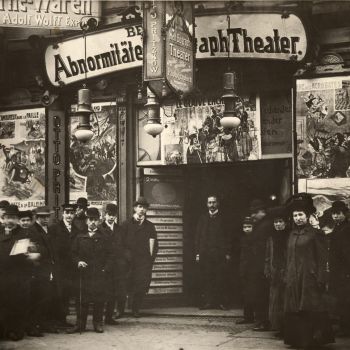
Biograph-Theater Otto Pritzkow (formerly the Abnormitäten- und Biograf-Theater), Münzstraße (Königsstadt, now Berlin-Mitte), c. 1908
Source: Deutsche Kinemathek -
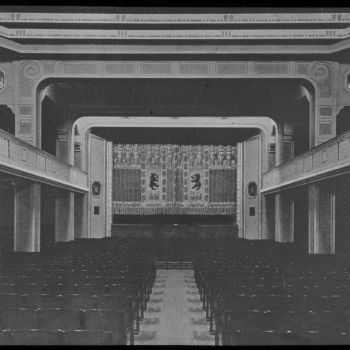
UT (Union-Theater), Alexanderplatz 5-7 (Könisstadt, now Berlin-Mitte), shown in its 1909 condition
Source: Deutsche Kinemathek -
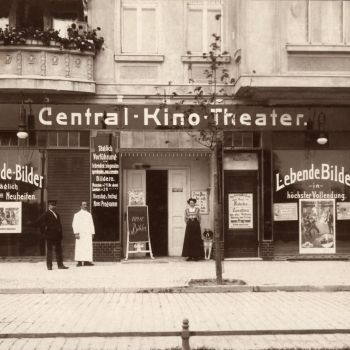
Central-Kino-Theater, Chausseestraße (Berlin-Lichterfelde, formerly part of Greater Lichterfelde, an independent municipality), now Hindenburgdamm 93a, c. 1910
Source: Deutsche Kinemathek -
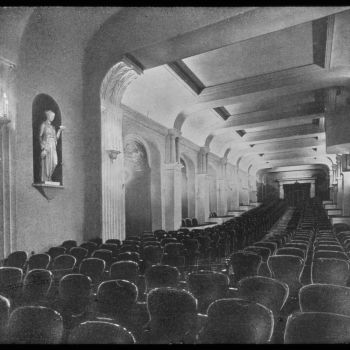
UT (Union-Theater), Unter den Linden 37 (Dorotheenstadt, now Berlin-Mitte), shown in its 1910 condition
Source: Deutsche Kinemathek -
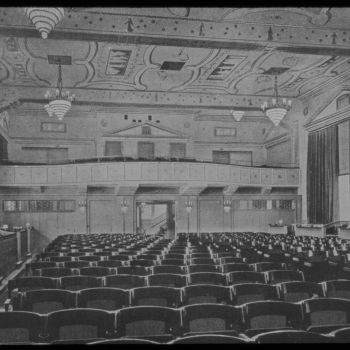
Admiralspalast-Lichtspiele, Friedrichstraße 101–102 (Dorotheenstadt, now Berlin-Mitte), shown in its 1910 condition
Source: Deutsche Kinemathek -
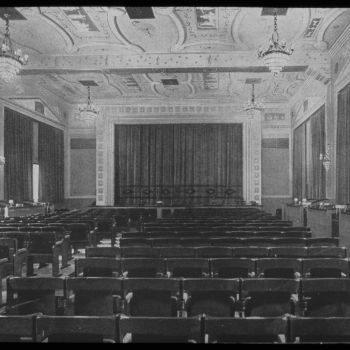
Admiralspalast-Lichtspiele, Friedrichstraße 101–102 (Dorotheenstadt, now Berlin-Mitte), shown in its 1910 condition
Source: Deutsche Kinemathek -
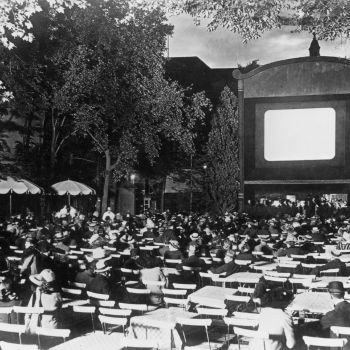
Open-air movie theater on Kurfürstendamm (Berlin-Charlottenburg, at that time an independent town in the Greater Berlin administration union), c. 1910
Source: Deutsche Kinemathek -
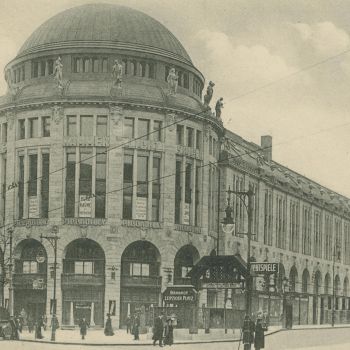
Kammerlichtspiele in Haus Potsdam (later Haus Vaterland), Köthener Str. 1–5 (Berlin-Tiergarten), before August 1914. Café Picadilly was renamed after the start of World War I.
Source: Deutsche Kinemathek -
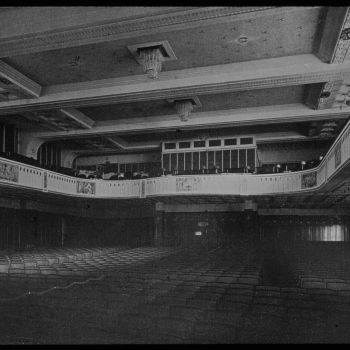
Kammerlichtspiele in Haus Vaterland, Köthener Str. 1–5 (Berlin-Tiergarten), shown in its 1911 condition
Source: Deutsche Kinemathek -
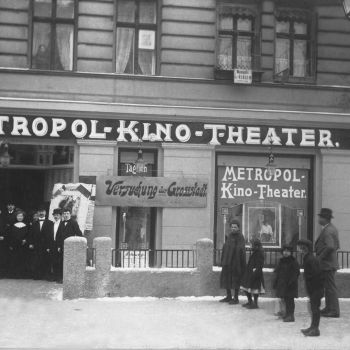
Metropol-Kino-Theater, Schulstr. 37 (Berlin-Wedding), c. 1912
Source: Deutsche Kinemathek -
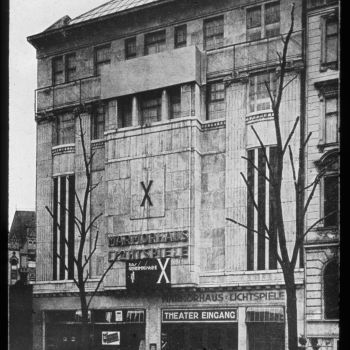
Marmorhaus, Kurfürstendamm 236 (Berlin-Charlottenburg, at that time an independent town in the Greater Berlin administration union), shown in its 1913 condition. The Marmorhaus was built in 1912–13, based on plans by architect Hugo Pál; it opened in 1913.
Source: Deutsche Kinemathek. -
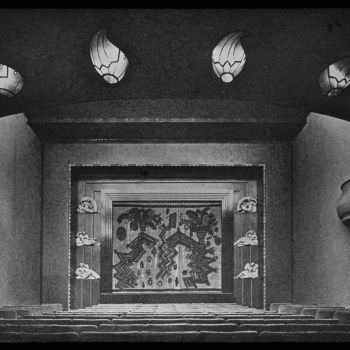
Marmorhaus, Kurfürstendamm 236 (Berlin-Charlottenburg, at that time an independent town in the Greater Berlin administration union), shown in its 1913 condition
Source: Deutsche Kinemathek -
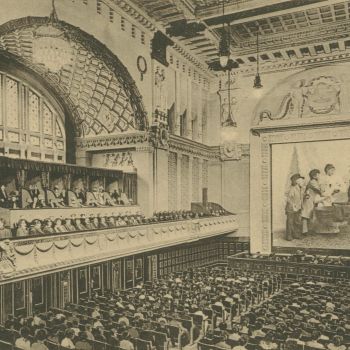
Mozartsaal-Lichtspiele, Nollendorfplatz 5 (Berlin-Schöneberg, at that time an independent town in the Greater Berlin administration union), shown in its condition before 1918. Around 1911 the concert hall in the Neues Schauspielhaus on Nollendorfplatz was redesigned to become the first movie theater on the square.
Source: Deutsche Kinemathek -
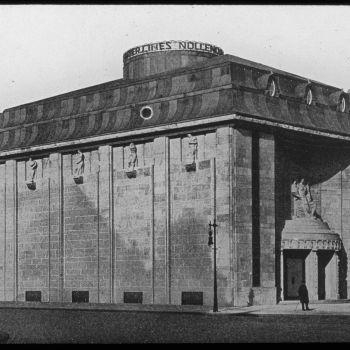
Cines (later the Ufa-Pavillon on Nollendorfplatz), Nollendorfplatz 4 (Berlin-Schöneberg, at that time an independent town in the Greater Berlin administration union). In 1913 the Cines-Theater opened across from the Mozartsaal.
Source: Deutsche Kinemathek -
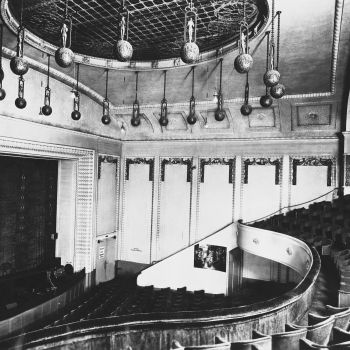
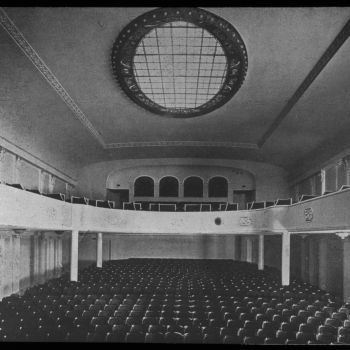
Cines (later the Ufa-Pavillon on Nollendorfplatz), Nollendorfplatz 4 (Berlin-Schöneberg, at that time an independent town in the Greater Berlin administration union). The new structure for the Cines-Theater was designed with an openable skylight.
© Deutsche Kinemathek – Hans Casparius -
BTL (Biophon-Theater Lichtspiele), Potsdamer Straße 96 (Berlin-Schöneberg, at that time an independent town in the Greater Berlin administration union), shown in its 1913 condition
Source: Deutsche Kinemathek -
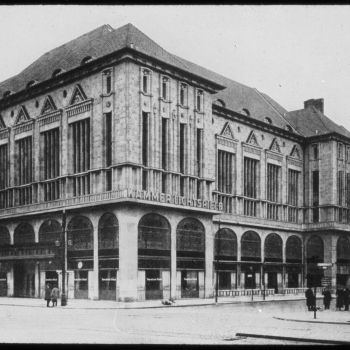
Kammerlichtspiele Tauentzienstraße, Nürnberger Straße 57–59 (Berlin-Charlottenburg, at that time an independent town in the Greater Berlin administration union), shown in its 1913 condition
Source: Deutsche Kinemathek -
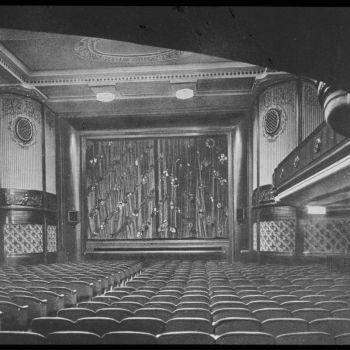
UT (Union-Theater), Friedrichstraße 180 (Friedrichstadt, now Berlin-Mitte), shown in its 1913 condition
Source: Deutsche Kinemathek


